


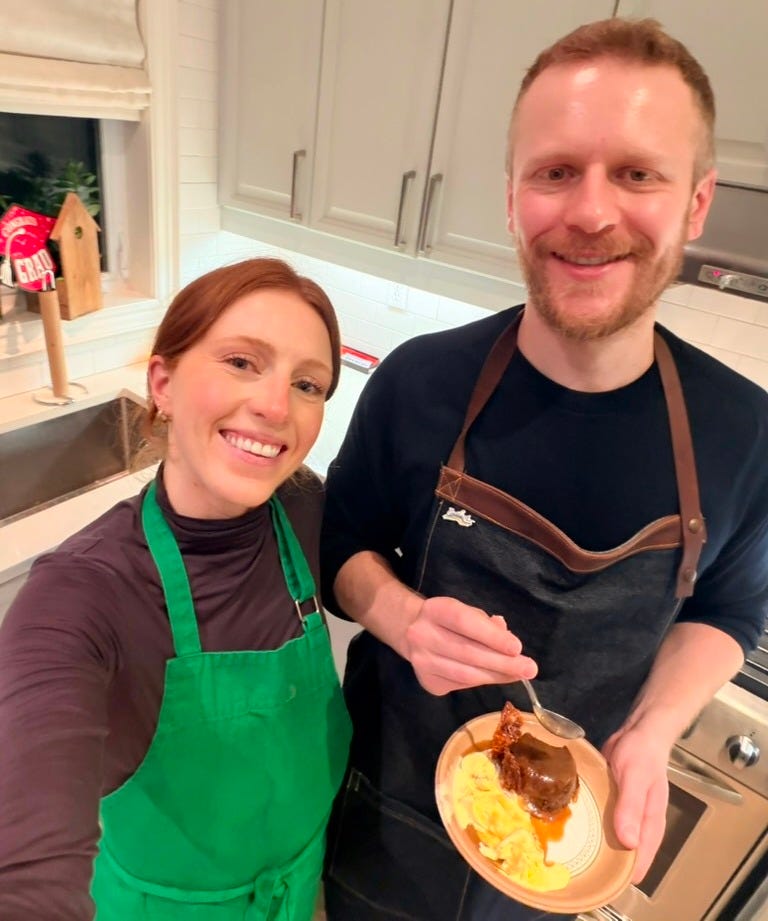
Last week I had the great pleasure (and challenge) of serving my first private dining experience. I donated a dinner to a charity auction, and much to my surprise… people actually bid on it.
It seemed like a great idea until I realized that plating a fine dining meal in someone else’s home is a completely different game than cooking in your own kitchen.
To no one’s surprise, I overthought this to the nth degree. I planned, practiced, and had more than a few sleepless nights trying to land on a menu that could be almost entirely prepared ahead of time, then simply warmed, plated, and served on-site. After testing a few options for the main, I kept coming back to short rib—it’s the ultimate make-ahead dish.
To lighten things up, I paired it with a bright, zingy blood orange sauce, a fennel and blood orange slaw, and a silky celeriac and fennel purée. In the end, it was a hit.
The rest of the menu included a Thai-inspired tuna tartare amuse, homemade brioche with whipped brown butter, an onion soubise with caramelized and crispy onions, and a sticky toffee pudding with salted butterscotch and homemade vanilla bean ice cream to finish.
I’m incredibly thankful for my official taste tester—and unpaid intern—Rob. Without his extra set of hands, this could have easily gone off the rails. It was challenging, but we made a great team.
Who knows where this might lead, but I’m really glad I did it… and equally glad to be putting my feet up for a minute after all of that.
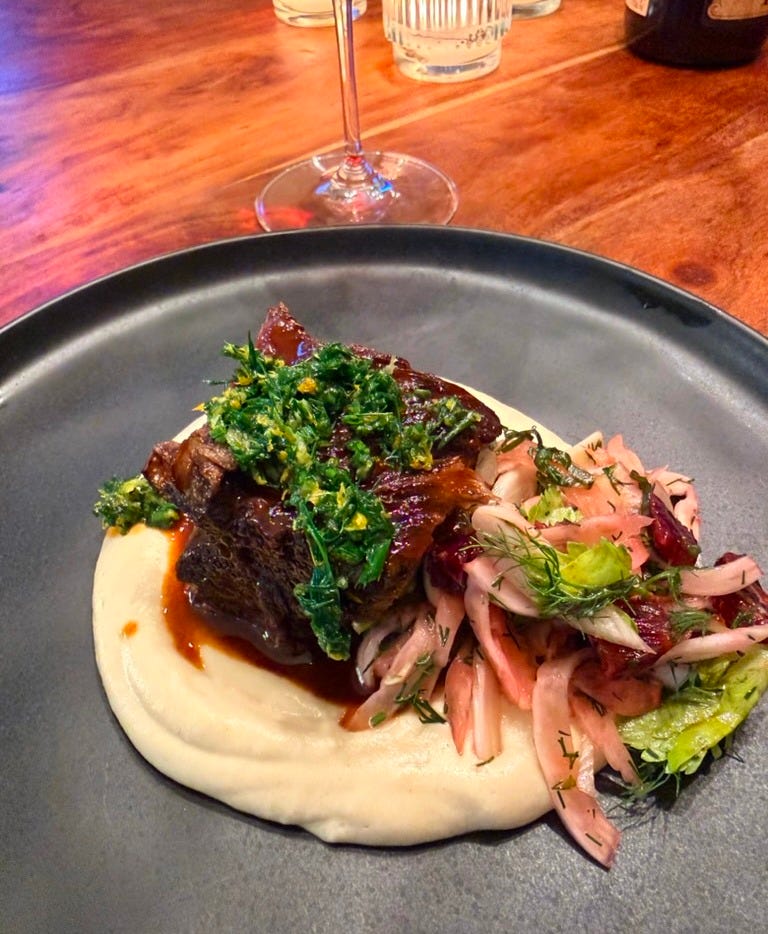
Braised Short Rib with Blood Orange
Serves 4
Ingredients
Braise
4 beef short ribs
1 onion, 1 carrot, 1 celery stalk
2 cloves garlic
1–2 tbsp tomato paste
1 cup red wine
1–1½ cups chicken stock
Splash of sherry vinegar
A few sprigs thyme and rosemary
Sauce
1 shallot
1 clove garlic
Olive oil
1–1½ cups blood orange juice (from ~3–4 oranges)
A few sprigs thyme and rosemary
½ cup chicken stock
Butter
A few drops soy sauce
Gremolata
¼ cup parsley, finely chopped
2 tbsp chopped chives
½ clove garlic (small), grated
Zest of 1 lemon + 1 orange
1 tsp lemon juice
Olive oil
Salt and pepper
Method
Season the short ribs generously with salt.
Heat about 2 tbsp neutral oil over medium-high to high heat in a Dutch oven or heavy-bottomed pot. Sear the ribs until deeply browned on all sides. Don’t rush this and don’t overcrowd the pan—work in batches if needed.
Remove the ribs (and if the oil is burnt, wipe it out), then add chopped onion, carrot, and celery to the same pot. Season with salt and pepper. Let them soften, then add garlic and tomato paste. Cook for 1–2 minutes, until the paste darkens slightly.
Deglaze with red wine and let it reduce by about half.
Add chicken stock (the liquid should come about halfway up the ribs, add more if needed), along with thyme, rosemary, and a small splash of vinegar.
Nestle the ribs back in, cover, and transfer to a 300°F oven for at least 2½–3 hours, until very tender but still holding their shape. There should be very little resistance when inserting a paring knife.
This is a great place to stop and chill overnight if serving the next day. If not, just skip right to the sauce instruction.
To reheat, first skim off the solid layer of fat that will have formed over the braising liquid. Warm on the stove over low heat until just simmering, then transfer to a 300°F oven for about 20 minutes, or longer while you prep the rest of the dish.
For the sauce, strain the braising liquid. Reserve about ¾ cup for the sauce, and return the rest to the pot with the ribs for reheating.
In a small saucepan, sauté the shallot and garlic in a bit of olive oil until translucent. Add 1 cup blood orange juice and a sprig each of thyme and rosemary. Reduce by about half.
Add the reserved braising liquid and about ½ cup chicken stock. Simmer until the sauce lightly coats the back of a spoon. Strain.
Finish by whisking in a knob of butter, a small splash of fresh blood orange juice, and a few drops of soy sauce. Taste and adjust seasoning as needed. You’re looking for something bright and balanced.
Mix the gremolata ingredients together just before serving and season with salt and pepper. Taste and adjust.
Serve the short rib over your purée of choice (see below for ideas), spoon over the sauce, and finish with a small dollop of gremolata.
Optional sides
Celeriac & fennel purée
1 medium celeriac
½ fennel bulb
~½ cup cream
Splash of milk
2–3 tbsp butter
1 lemon
Peel and chop the celeriac, and roughly chop the fennel.
Cook in butter until softened, then add cream and a splash of milk if needed—the liquid should come up to about equal to the veg in the pot. Season with salt, and simmer until everything is very tender.
Blend with an additional knob of butter until completely smooth, then pass through a strainer.
Finish with salt and a squeeze of lemon juice. You want it silky and just loose enough to spread.
Fennel & blood orange slaw
1 fennel bulb + fronds
1 blood orange, cut into “supremes”
½ cup fresh herbs (I used dill and mint, but parsley or chives also work)
Olive oil, lemon juice
Slice the fennel as thinly as possible—use a mandolin if you have one.
Add blood orange segments, chopped herbs, and dress lightly with lemon juice, olive oil, and salt. Taste and adjust.
A supreme is a segment cut free from the peel and membranes.
Notes
This is a great make-ahead dish. Everything can be done in advance and simply reheated and assembled when you’re ready to serve.
For the slaw, don’t dress ahead of time as it will get soggy. To keep the fennel crunchy and prevent oxidation if prepping ahead, submerge it in cold water with a squeeze of lemon juice.
I believe you knocked that out of the park! Congratulations 🎊
Those short ribs look to die for!