


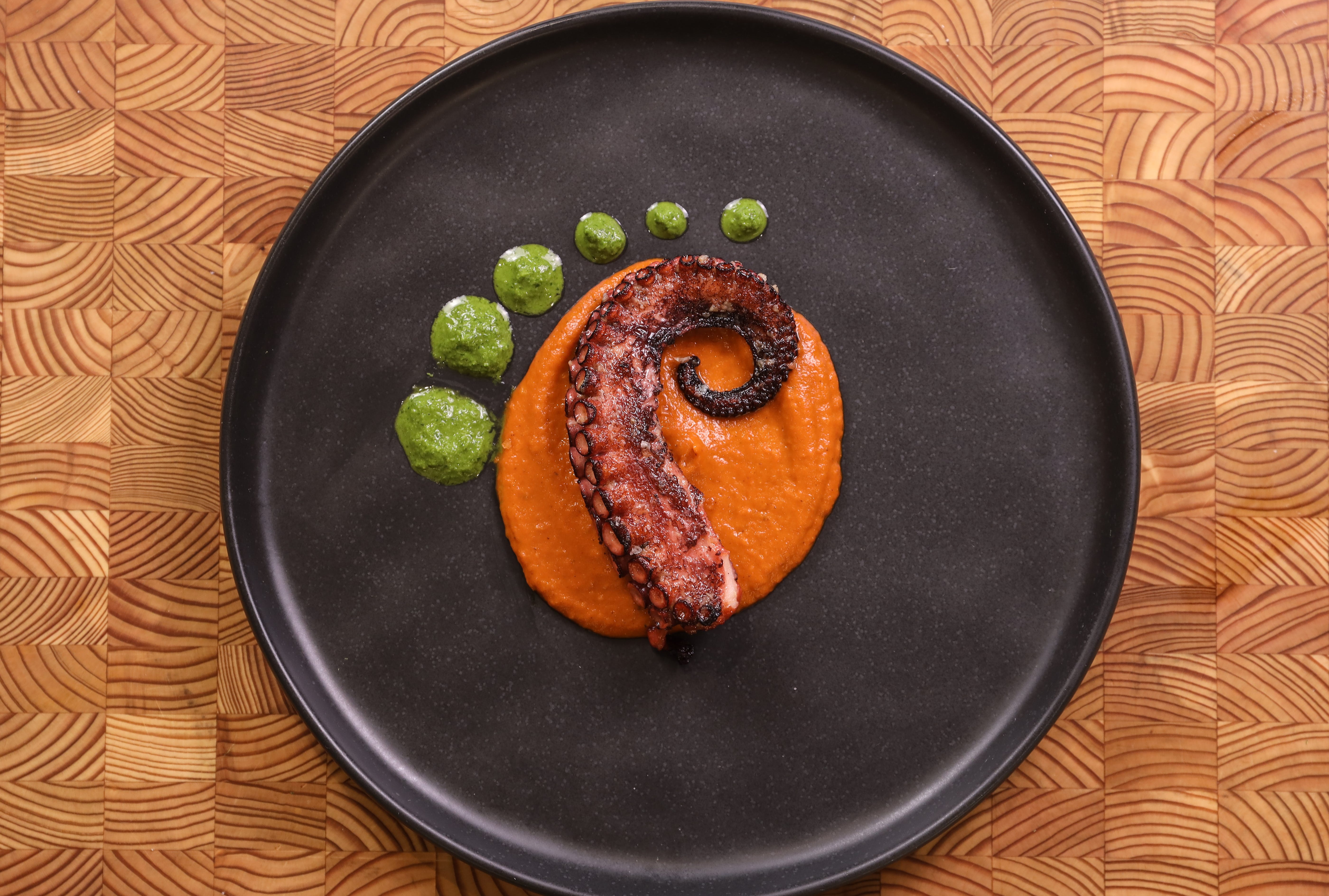
I may not have won MasterChef Canada, but I had an incredible experience and learned some valuable lessons along the way — when to pare things back, and when to trust my gut.
When I pictured my finale main dish, this is what I think I was originally imagining. A few too many bips, bops, and structural elements later, and it became more complicated than it needed to be. It’s easy to look back and ask, why add all of that? But in the pressure of a finale, with cameras rolling and judges to impress, decision-making gets a little noisy.
Regardless of the outcome, both versions of this dish are, at their core, about the octopus. I don’t take eating octopus lightly. I know it’s a controversial ingredient, and one many people choose not to eat. For me, it’s something I save for special occasions. It feels meaningful, and it always takes me back to travelling through Spain with my husband, Rob, enjoying octopus in its simplest, most beautiful form.
This dish is a return to that feeling — simple, beautiful, and celebratory.
Octopus isn’t necessarily difficult to cook, but it does take time, patience, and a little intuition. If you’re craving an escape from the brutal winter we’re having, consider an afternoon in the kitchen with a glass of wine and a good playlist. I love pairing this with my tomato bread, patatas bravas, and blistered shishito peppers for a meal that truly transports you to the coast of Spain.
Ingredients
Octopus
1 whole octopus (2–3 lb), cleaned, or individual tentacles
2–3 tbsp olive oil
1 shallot, halved
3 cloves garlic, smashed
½ tsp coriander seeds
2 bay leaves
3 sprigs thyme
1–2 cups dry white wine
Salt and freshly ground black pepper
Smoky Butter Sauce
2 tbsp butter
1 small garlic clove or ½ large clove, finely grated
½ tsp paprika
Zest of ½ lemon
1–2 tsp fresh lemon juice
Bravas Sauce
6 medium tomatoes (Roma or similar), quartered
3 red serrano chiles
2 tbsp olive oil, divided
2 tsp smoked paprika, divided
½ tsp cayenne pepper
2 shallots, roughly chopped
3 cloves garlic, roughly chopped
1 tbsp tomato paste
2 tbsp sherry vinegar
½ cup chicken stock
1 tsp sugar
2 tbsp butter
Salt and pepper
Green Chimichurri
1 loose cup flat-leaf parsley leaves (about a large fistful)
½ cup cilantro leaves (about a small fistful)
Small fistful mint leaves
1 small shallot
1 clove garlic
½ red Thai chile (or to taste)
2 tbsp red wine vinegar
Zest of ½ lemon
1–2 tbsp fresh lemon juice
¼–⅓ cup olive oil
Salt and pepper
Herb measurements are intentionally loose — think fistfuls, not tightly packed cups.
Method
1. Braise the Octopus
Coat the bottom of a large pot with 2–3 tbsp olive oil and heat over medium. Add the shallot, smashed garlic, coriander seeds, bay leaves, and thyme. Once fragrant and bubbling, add the octopus. Let the tentacles curl from the heat of the pot, about 30–60 seconds, then pour in 1–2 cups dry white wine — just enough to almost cover the octopus (the amount will depend on the size of your pot).
Cover with a parchment cartouche with a small hole in the centre and simmer gently for 25 minutes. Flip and cook another 15 minutes.
The octopus is done when a sharp paring knife meets the thickest part like a cooked Yukon Gold potato or a ripe pear — tender but not collapsing. Some texture is good; mush is not. Let it rest in the braising liquid until you’re ready to finish the dish, the octopus stays juicier this way. Remove just before grilling, pat very dry, and separate tentacles if needed.
2. Bravas Sauce
While the octopus cooks, heat the oven to 400°F (200°C). Toss the tomatoes and serrano chiles with 1 tbsp olive oil, 1 tsp smoked paprika, ½ tsp cayenne, salt, and pepper. Spread on a baking sheet and roast for 20–25 minutes, until deeply caramelized.
Meanwhile, sauté the shallots and garlic in the remaining 1 tbsp olive oil and 1 tbsp butter until translucent and fragrant. Stir in the remaining 1 tsp smoked paprika and cook briefly until fragrant, about 30 seconds. Add the tomato paste and cook for 1 minute until dark red, then deglaze with sherry vinegar and reduce slightly.
Add the roasted tomatoes, sugar, and chicken stock and simmer until very soft. Blend and finish with 1 tbsp butter until smooth and glossy. Taste and adjust seasoning.
3. Green Chimichurri
Small blender (Magic Bullet style): Add all ingredients starting with ¼ cup olive oil and blend until smooth and cohesive. Add more oil or vinegar as needed to loosen.
Large blender: Blend the herbs, shallot, garlic, vinegar, and chile first, then drizzle in ¼–⅓ cup olive oil with the motor running. Add the remaining ingredients and blend briefly until bright green and spoonable.
Taste and adjust seasoning, adding more vinegar, lemon, or salt as needed.
4. Char the Octopus
Brush the tentacles lightly with olive oil and season with salt and pepper. Grill over very high heat in a pan or on the grill until charred and warmed through, about 1 minute per side.
5. Smoky Butter Sauce
Heat the butter, garlic, and paprika gently in a small saucepan just until the butter melts and the garlic becomes fragrant. Remove from the heat and stir in the lemon zest and juice. Brush generously over the warm octopus after grilling.
6. To Serve
Spoon warm bravas sauce onto the plate, top with charred octopus, and finish generously with green chimichurri and an extra squeeze of lemon if you like.
This is really thoughtful. I love how you framed it as learning when to pare back and when to trust your gut, especially under that kind of pressure. The way you brought it back to the octopus itself, and tied it to memory and meaning rather than spectacle, is beautiful and grounding.
I’m curious, looking back now with some distance, do you feel that noise of the finale changed how you usually cook, or did it actually teach you something that you still carry with you in the kitchen today?
Same